
Cooking involves sauteing or creating soup, roasting, stewing, etc. For performing each different task, you will need different types of cooking pans.
With a plethora of cooking pan varieties available in the market, choosing the right one that fits your cooking needs can often be daunting.
In this article, we shall discuss the different types of pans available and their usage. Whether you are a beginner, amateur, or professional, you need to be aware of the significance of each type.
Here is an ultimate guide that will help you explore the wide range of pans that you can use for several cooking activities.
Let us get started.
Table of Contents
Types of Pans
Pans come in different shapes, sizes, and construction for various cooking needs. Here are the most common types available. Let us see how you can get the best out of the wide range of pans:
1. Fry Pan / Skillet
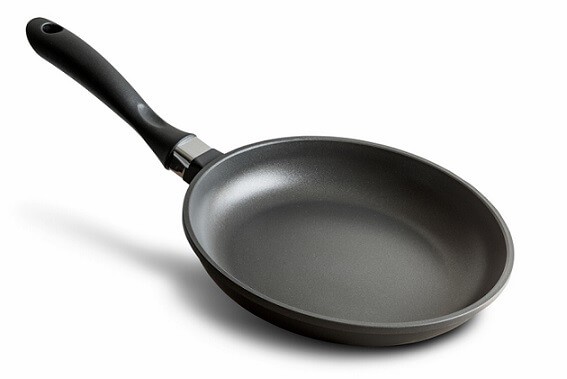 The frying pan or skillet is the most essential kitchen cookware that we use. It is a versatile item that many of us have and love to use. They help in cooking the food faster and require less oil to prepare the dishes.
Construction:
The skillets feature a flat bottom and curved sides. These are the most suitable option for frying or turning foods.
These pans come with lids, as well, and help in maintaining the heat and moisture inside.
Material:
The fry pans are available in different materials like stainless steel, or ceramic, and aluminium that comes with a non-stick coating.
You should not heat the non-stick pans above medium heat, as it will damage their coating. However, you can use the stainless-steel pans on high heat.
Sizes:
The skillets are available in different sizes to choose from for easier cooking.
Maintenance:
The fry pans require less maintenance.
Cleaning:
These pans are easy to clean. However, you should refrain from using an abrasive scrubber as it can damage the non-stick coating.
Ideal For:
The fry pans or skillets are ideal for stir-frying.
2. Cast Iron Skillet
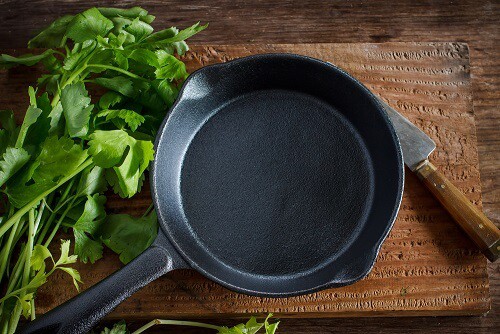 Cast iron skillets are another type of cookware that is similar to fry pans.
Construction:
The cast-iron skillets are heavy utensils. However, these are very good heat conductors that help in maintaining the temperature. They help in cooking food with fewer chances of scorching. You can use these skillets in the oven, as well.
Material:
These pans are typically made from the cast iron material.
Sizes:
The cast-iron skillets are available in various sizes.
Maintenance:
The cast-iron skillets require high maintenance of all the available pan types. You need to preseason them before using them for the first time. You should also keep seasoning the cast iron pans frequently to maintain the non-stick surface.
Cleaning:
These pans are not so easy to clean. You should not use soap on them. Also, you should refrain from using an abrasive scrubber as it can damage the non-stick coating. Moreover, there are chances of rusting, if you do not condition them or dry them properly.
Ideal For:
The cast-iron skillets are ideal for searing, sauteing, broiling, baking, etc.
3. Sauté Pan
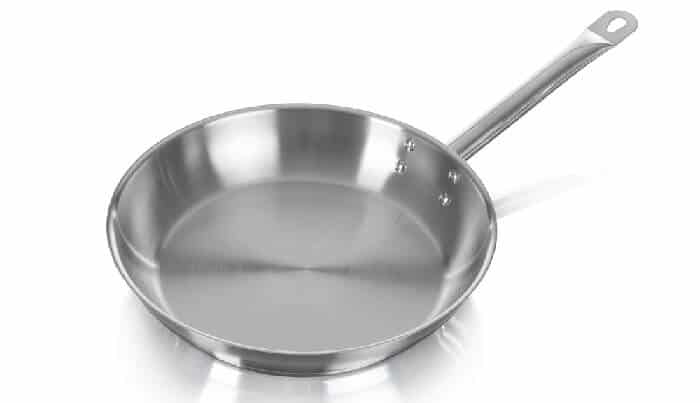 As the name says, this pan is exclusively for sauteing.
Construction:
When it comes to the construction or design, these pans are similar to the fry pans, i.e., they have a flat bottom. However, the only difference is that they have a wide bottom area with straight and high sides. This design allows you to contain the food and further allows heat exposure to all the sides. You can use them for multiple uses other than sauteing. These pans come with lids, as well, and help in maintaining the heat and moisture inside.
Material:
They are available in different materials like stainless steel, cast iron, etc.
Sizes:
The sauté pans are available in different size options.
Maintenance:
The sauté pans require proper and regular maintenance like every other type of pan.
Cleaning:
These pans are easy to clean. However, you should refrain from using an abrasive scrubber or dishwashing liquid as it can damage the non-stick coating.
Ideal For:
The sauté pans are ideal for sauteing, deep-frying, searing, etc.
4. Sauce Pan
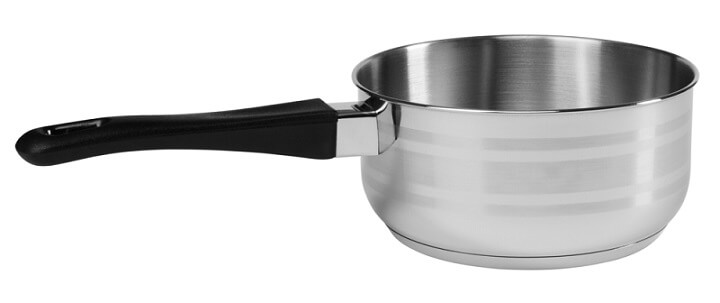 The sauce pans are basically for preparing sauces and soups of all kinds.
Construction:
The sauce pans feature a rounded bottom, long handles with straight and tall sides. Because of this design, they are versatile to prepare sauces and soups. These pans come with lids, as well, and help in controlling the evaporation.
Material:
They are available in different materials like non-stick, stainless steel, ceramic, cast-iron, etc.
Sizes:
The sauce pans are available in different size options.
Maintenance:
The sauce pans require proper and regular maintenance like every other type of pan.
Cleaning:
These pans are easy to clean. However, you should refrain from using an abrasive scrubber or dishwashing liquid as it can damage the non-stick coating.
Ideal For:
The sauce pans are ideal for preparing sauces, soups, reheating leftovers, stewing, simmering, etc.
5. Grill Pans or Griddles
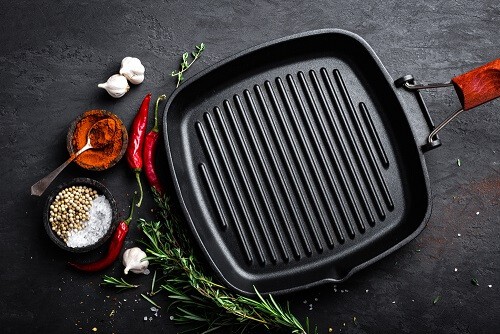 Griddle pans are another type of pan that is similar to frying pans.
Construction:
The gill pans come in similar size and material as that of the frying pans. However, they do not contain flat surfaces like them. Instead, they feature raised edges throughout the pan. Also, they do not have long handles like them.
The grill pans are round or square-shaped cookware. Most pans come in round shapes. These may be large and contain a flat cooktop surface, as well. Pans of these kinds are the best for cooking meat.
The significance of griddle pans is that they leave char marks on your food that not only look lovely on them but also enhances the taste. It gives the food a smoky, delicious, and crunchy touch.
Material:
The grill pans are available in different materials like cast iron, cast aluminium, stainless steel, etc.
Sizes:
The grill pans are available in different sizes options to choose from.
Maintenance:
The grill pans require high maintenance. You need to season these pans frequently to maintain the non-stick surface.
Cleaning:
The grill pans are easy to clean. However, you should not use soap on them. Moreover, you should only use a non-scratch scouring pad, as it will protect the non-stick coating from getting damaged.
Ideal For:
The grill pans are ideal for grilling meat and vegetables.
6. Wok
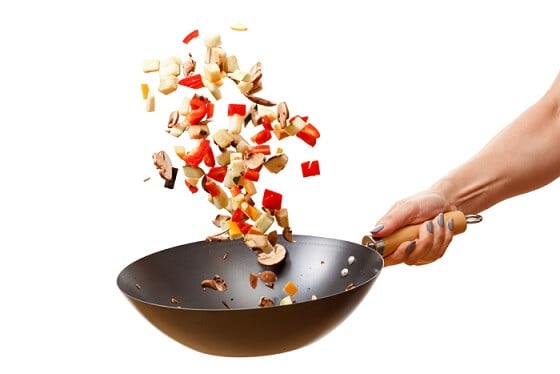 Woks are the most popular and commonly used cookware when preparing Asian cuisine.
Construction:
The woks are similar to fry pans. But the difference is that woks have rounded basins and high and sloping sides. This design helps in spreading heat evenly on all sides and cooks food faster than all pans. Moreover, they require less oil.
Material:
The woks are available in stainless steel, non-stick, carbon steel options.
Sizes:
The wok pans are available in different sizes options to choose from. Pans with 14 inches diameter are typically the ideal-sized woks.
Maintenance:
The wok pans require less maintenance.
Cleaning:
The wok pans are easy to clean.
Ideal For:
The wok pans are ideal for stir-frying, deep-frying, steaming, tossing food, etc.
7. Braiser Pan
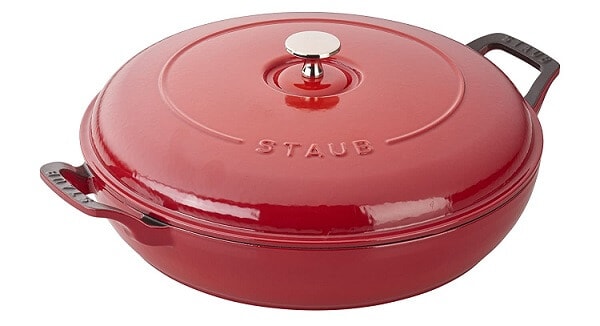 Braiser pans are multi-tasking pans that you can use for braising, frying, boiling, etc.
Construction:
Braisers are pans having large and flat bottoms with moisture-locking lids. They have two handles for easy transport. They have a similar capacity to the Dutch oven and this is what makes the braiser pans perfect for both induction and glass cooktops. They have resistance to high heat.
Material:
The braiser pans are available in cast iron, ceramic, and stainless-steel materials.
Sizes:
The braiser pans are usually heavy and are available in a variety of sizes.
Maintenance:
These pans require less maintenance.
Cleaning:
The braiser pans are easier to clean.
Ideal For:
The braisers are ideal for braising, roasting, searing, browning, and simmering.
8. Casserole Pan
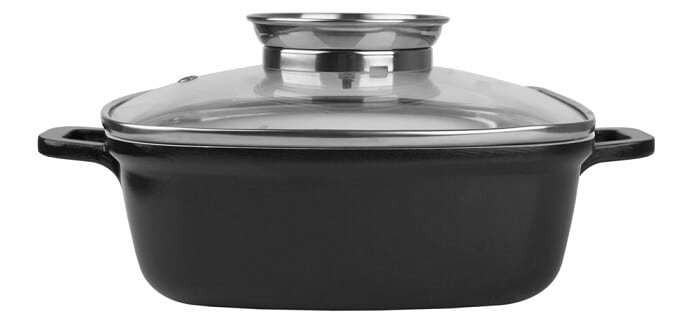 A casserole pan is similar to a Dutch oven.
Construction:
The casserole pans are large and deep pans with a wide bottom area. You can use these pans in the oven as also as a serving dish. They are available in many shapes like rectangular, square, and oblong.
Material:
Casserole pans come in various materials like glass, metal, ceramic, cast iron, etc.
Sizes:
These pans are available in various size options. The most common size found in casserole pans is 9×13 inches.
Maintenance:
The casserole pans are easy to maintain.
Cleaning:
The casserole pans are easy to clean.
Ideal For:
These pans are ideal for baking, making soups, stews, pot roasts, sauces, etc.
Types of Bakeware Pans
Let us have a look at the different types of bakeware pans available.