
Reverse Osmosis is considered one of the best water purification techniques. If you are wondering why and how, then this article is of a great help.
Here, we have provided a detailed explanation of how RO purification works and what is it more efficient.
You will also find benefits of using an RO water purifier at home. So, let’s us get started.
Table of Contents
What Is A Reverse Osmosis Water Purifier?
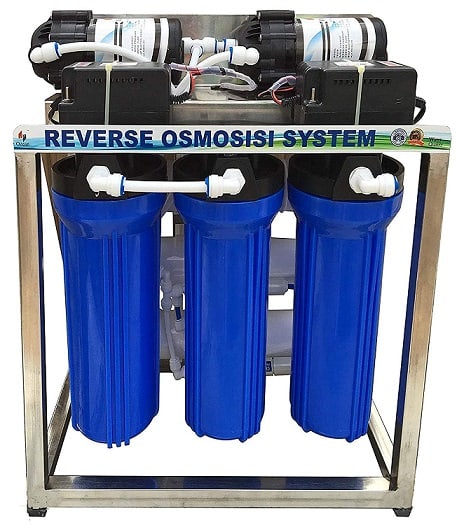
An RO water purifier is an appliance that uses the reverse osmosis process to purify the water. It demineralizes or deionizes the water and removes unwanted particles and harmful contaminants from the water during the water purification process. It further makes the water fit and safe for consumption.
Let us see in detail how the RO purification process takes place.
How Does An RO Process Work In Removing Contaminants?
As mentioned earlier, reverse osmosis is a water filtration and purification method that removes contaminants from the water. In addition to that, the RO improves the quality of water, making it safe for consumption. You can drink the treated water, as it is free from all unwanted molecules and harmful particles.
Here is how the RO purification process takes place:
- The reverse osmosis purifier consists of a semi-permeable membrane.
- The unfiltered water is allowed to pass through this membrane with external pressure.
- During this process, the water flows through the concentrated side of the membrane.
- As it keeps flowing with external pressure, the contaminants from the water get filtered away.
- The reverse osmosis membrane traps the contaminants in the water and blocks them.
- As a result, the uncontaminated and freshwater leaves from one side of the membrane. All the contaminants, including small and large, get blocked on the other side.
Let us have a look at the various contaminants that an RO water purifier removes from your water.
What Contaminants Does The Reverse Osmosis System Remove?
Water mostly consists of contaminants that are harmful to health and cause taste and odour issues. These particles can easily penetrate through streams and rivers, thereby reaching your water lines. No matter how hard your public water suppliers try to remove these contaminants, they still remain in your water.
This is where you can use the reverse osmosis system. Not all filtration or purification systems remove all the contaminants out of the water, but only an RO system can. Below are the contaminants that this reverse osmosis system traps and removes:
Reverse osmosis system can remove
- Fluoride (85-92%)
- Lead (95-98%)
- Chlorine (98%)
- Pesticides (up to 99%)
- Nitrates (60-75%)
- Sulfate (96-98%)
- Calcium (94-98%)
- Phosphate (96-98%)
- Arsenic (92-96%)
- Nickel (96-98%)
- Mercury (95-98%)
- Sodium (85-94%)
- Barium (95-98%)
What Are The Basic Components Of An RO System?
Although most RO systems look and work similarly and have the same components, the quality of components differs. Below are some of the basic components found in every reverse osmosis system.
- Cold Water Line Valve
- Pre-filters
- Reverse osmosis membrane
- Post-filters
- Automatic shut off valve
- Check valve
- Flow restrictor
- Storage tank
- Faucet
- Drain line
Let us look at the significance of each component of the RO system.
1. Cold Water Line Valve:As the name says, this is the valve for connecting to the cold-water
supply line. It comes with a hose for attaching the inlet side of the pre-filter of the RO purifier. Through this filter, the water passes into the RO system.
2. Pre-Filter:The pre-filter is that component that has a connection to the cold-water supply line. Water enters the supply line first and then passes through the pre-filter of the RO system. An RO system may have multiple pre-filters in it, and the most common ones are the sediment and carbon filters.
The primary role of the pre-filter is to protect the RO membranes of the system. They prevent the contaminants, impurities, and other dirt from clogging the system. Furthermore, the carbon filters even help in removing chlorine from the water. This is very harmful to the RO membranes and may damage them.
3. Reverse Osmosis Membrane:The semi-permeable RO membrane is yet another crucial component of the reverse osmosis system. It is like the heart and comes specifically designed for removing a wide variety of contaminants. The water, after it passes through this membrane, enters into a water storage tank. This is where the treated water gets stored.
4. Post filter:This is the final stage where water from the storage tank or reservoir passes through the post filter. It is a carbon filter. After the water comes through this filter, it goes to the RO faucet. In this stage, the filter polishes off the water and effectively removes any unwanted taste and odour remaining in the water.
5. Automatic Shut-Off Valve:The automatic shut-off valve is that component that helps in conserving water. Once the storage tank gets full, this valve shuts off automatically and further stops more water from entering the RO membrane. Additionally, it also blocks the discarded water flow to the drain pipe. Once you start drawing water from the faucet, and the pressure in the tank significantly reduces, the shut-off valve opens again. It allows the drinking water to get inside the water reservoir through the RO membrane. Simultaneously, it will divert the discarded water through the drainpipe.
6. Check Valve:You can locate the check valve on the outlet side of your RO membrane. The primary job of this check valve is to prevent the water from flowing back to the RO membrane from the reservoir. This is an essential component because a backward flow can damage the RO membrane by causing a rupture.
7. Flow Restrictor:As the name says, this component restricts the water flow through the RO membrane. Although these flow controls are available in different styles, the common purpose of all these is to maintain the required flow rate. Additionally, the flow restrictor also helps in maintaining pressure when the water passes into the membrane. This additional pressure is required to deliver treated water in adequate quantities. In absence of this pressure, water gets flowing down through the drain pipe. You can locate this flow control in the drainpipe tubing of your RO system.
8. Storage Tank:The water storage tank or the reservoir is yet another crucial component of the reverse osmosis purifying system. The capacity of a standard tank is two to four gallons of water. When the tank is full, it keeps the water inside pressurized. The size of a regular under-counter RO tank measures about 12 inches and 15 inches respectively in diameter and length.
9. Faucet:Every RO unit features a faucet. These faucets are available in the air gap and non-airgap faucets. While the latter models are more common, the former requires specific plumbing regulations. If you want to complement your kitchen décor, you can choose from the designer faucets available in the market.
10. Drain line:The last vital component of the reverse osmosis system is the drain line. You can find it at the outlet side of the RO membrane that goes to the drain. The purpose of this drain line is to discard the wastewater or contaminated water treated by the RO membrane.
What Is The Working Mechanism Of A Reverse Osmosis Membrane In The Unit?
We all must have now got a complete picture of what reverse osmosis is. RO is a process that removes unwanted and harmful contaminants and impurities from the water by pushing the water molecules through a semipermeable membrane with great pressure. This process traps the contaminants, filters them, and flushes them away from the water. As a result, you are left with clean, safe, healthy, and tasty drinking water. The upside of reverse osmosis is that it can remove up to 99 percent of the wide variety of contaminants like fluoride, chlorine, etc.
The reverse osmosis process generally takes place in four different stages. They are:
- Sediment Filter
- Carbon Filter
- Reverse Osmosis Membrane
- Polishing Filter
Let us learn in detail about the filtration process and the various stages below:
1. Sediment Filter
This is the initial stage of the filtration process that uses a sediment filter. Also known as the pre-filter stage, this step traps the sediment, dirt, and silt. It prevents dirt from entering the RO membranes and further protects them from damage caused by sediment.
2. Carbon Filter
The next stage is where the system uses a carbon filter. This filter is specially designed for removing contaminants and harmful particles like chlorine from the water. These particles hamper the functioning and performance of the RO membrane and also decrease their lifes